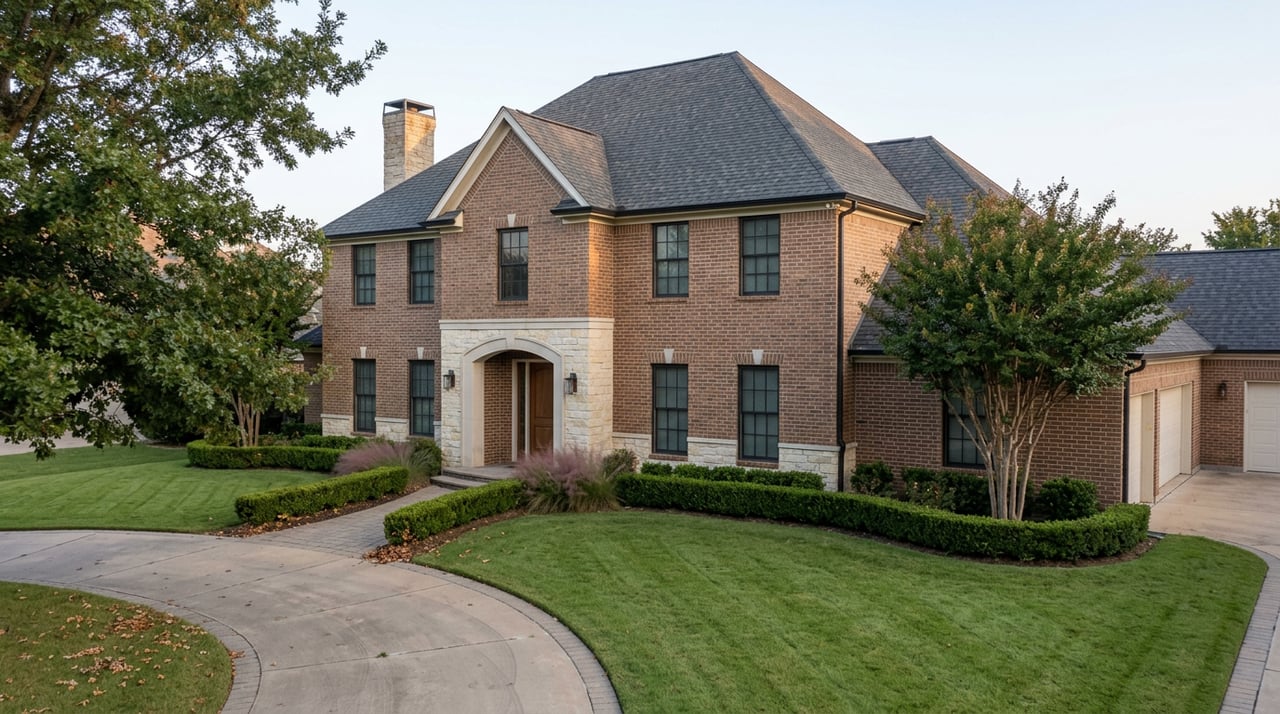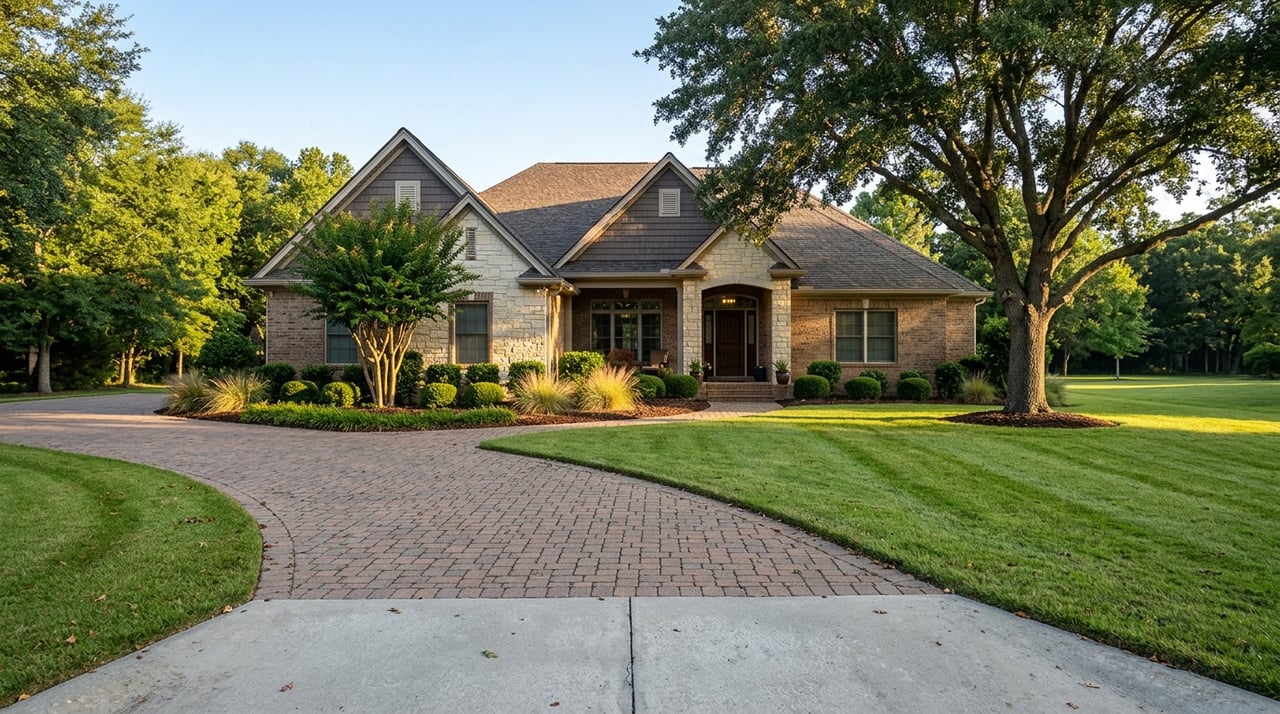
Picture a buyer deep into the option period on a resale in The Highlands at Trophy Club. The title company pulls two years of tax history for comparison. Year one shows a modest county tax bill and a separate line on the water statement labeled "PID Surcharge." Year two: the surcharge is gone from the water bill, and the county tax bill is noticeably higher. Nothing about the house changed. The lot didn't grow. Nobody added a pool. The number moved because of a legal reclassification that a lot of longtime residents haven't fully registered yet.
That reclassification is showing up in Highlands tax records right now, and it changes how you read a Trophy Club tax history, what you can deduct on a federal return tied to the property, and who gets a say in how the money gets spent. None of it shows up on a listing sheet. All of it shows up during due diligence.
What actually moved
Trophy Club Municipal Utility District No. 1, known locally as TC MUD 1, has been expanding its boundaries to fully absorb Trophy Club Public Improvement District No. 1, the taxing structure that covers The Highlands. The Town's own explanation of the process lays out the mechanics plainly: for tax year 2025, the bills that came due this past January, PID residents saw their Emergency Service assessment removed and replaced with a similar dollar amount taxed through TC MUD 1 instead.
The Town frames the underlying logic in one line worth remembering if you're comparing tax records on a Highlands property: "You pay one or the other. You do not pay both."
It helps to know that the PID has always carried two separate charges, not one. The first is a fixed, per-lot assessment that funded the original streets, drainage, and utility buildout, the kind of charge disclosed through a mandatory Texas Property Code Section 5.014(A) notice that names the balance tied to the lot. That charge is not changing. The second is the annual emergency services assessment that funded fire protection, billed for years as a line item on the water bill. That's the piece converting to a MUD tax.
Why this isn't actually a tax increase, even though it looks like one
The mechanism underneath the swap is the part most explanations skip. The old PID fire assessment was a flat dollar figure, the same charge whether the home was a starter resale or an executive estate. The new MUD tax is ad valorem, meaning it's calculated as a percentage of the home's assessed value. That single change quietly redistributes who pays what. A home valued below the PID area's average will see a slight decrease in this particular line. A home valued above the average will see a slight increase. Two houses that paid the exact same fire assessment last year can now owe different amounts for the identical service, purely because one is worth more on paper.
There's an upside buried in the same move. Because the charge was previously classified as an assessment on a property technically outside the district's boundaries, it wasn't deductible on a federal return. As a MUD ad valorem tax, it now qualifies as ordinary property tax, which typically is deductible. PID residents also pick up something they didn't have before: the ability to vote in TC MUD 1 board elections and even run for a board seat, a right previously reserved for residents already inside the district.
Here's how the two structures compare side by side:
| Old: PID Emergency Services Assessment | New: TC MUD 1 Ad Valorem Tax | |
|---|---|---|
| Appears on | Water and sewer statement | County property tax statement |
| Calculated as | Flat amount per home | Percentage of assessed value |
| Federally deductible | No | Yes, as ordinary property tax |
| Voting rights attached | None | Vote in MUD board elections |
Why this is a right-now problem, not old news
Today is August 10, 2026, which means the tax year 2025 bill, due this past January 31, is currently the most recent full-year record on file for every Highlands property. Any buyer, lender, or title company pulling tax history on a resale this month is looking at the first cycle where this change actually appears in black and white. Pair that with the water bill: the PID surcharge disappeared from monthly statements starting in October 2025. So a buyer comparing the last two years of both bills side by side, which is exactly what a careful option-period review looks like, will see the line move from one document to the other in real time.
The dollar amounts involved aren't trivial. Aggregated MLS data put the average Trophy Club home price at $893,870 in August 2026, with a price per square foot around $274. Three months earlier, in March 2026, the townwide median sale price had already climbed to $847,500, up 30.1% year over year. Layer that appreciation onto a base tax burden that's already heavy: property tax data for the Denton County portion of Trophy Club shows a median tax bill of $10,831, more than four times the national median of $2,400, according to figures compiled by Ownwell. The PID and MUD lines sit on top of that base. When home values are rising this fast and the underlying charge just switched from flat to value-based, the stakes of misreading a tax history go up with them.
The overlay that doesn't follow the same lines
Layered on top of the tax question is a separate one: which HOA actually governs the lot, and what can you do with the exterior once you own it. Trophy Club's HOA map doesn't follow the PID/MUD boundary at all, and it doesn't even follow the marketing name on the sign. The Highlands proper, covering Neighborhoods 1, 2, 5, 6, 7, and 9, is managed by Principal Management Group. Abbey Moor, technically Neighborhood 8 and sold under the same Highlands name, answers to a different company entirely: Neighborhood Management Inc.
Elsewhere in town, according to the Town's own resource directory:
- Canterbury Hills is managed by Essex Association Management LP
- Churchill Downs is managed by PMI Metroplex Properties
- Hogan's Glen has its own dedicated property management group, and its architectural control committee requires approval for any modification, change, repair, replacement, or addition to a home's exterior
- The Trophy Club Townhome Community answers to Paragon Property Management Group
Several current listings around town also note specific pockets with no HOA at all, a detail that matters just as much as which management company you land under, since it changes both your monthly obligations and your freedom to change a fence line or a roof color without a committee's sign-off.
What to actually ask for before you sign anything
- Request the Texas Property Code 5.014(A) PID notice on any Highlands property. It names the exact assessment balance tied to that specific lot.
- Ask the title company to pull the last 24 months of both the county tax statement and the water utility bill, not just one, so you can see whether the property already reflects the fire-assessment shift or is mid-transition.
- Confirm which management company actually governs the lot, not just the subdivision name on the sign. The Highlands and Abbey Moor share a PID and a marketing identity, not a management company.
- If you're buying into Hogan's Glen or another ACC-governed section, ask for the architectural approval history before you plan any exterior project.
- Ask whether the fixed infrastructure portion of the PID assessment has been paid off. It can be prepaid in full, and a seller who already did that is handing you a cleaner bill than one who hasn't.
FAQ
Does the PID-to-MUD change affect homes outside The Highlands? No. This shift is specific to the section of Trophy Club inside Public Improvement District No. 1, which is The Highlands. Homes elsewhere in town were already inside TC MUD 1's boundaries and already paid the district's standard tax rate.
Will my HOA dues change because of this? No. The tax restructuring is a district and taxing question, not an HOA question. Dues and architectural rules are set separately by whichever management company covers the specific section.
Is the fixed infrastructure assessment going away too? Not automatically. Only the emergency services, or fire, assessment is converting to a MUD tax. The original infrastructure assessment tied to the PID's authorized improvements remains a separate line and can still be paid off early or carried on its existing schedule.
Trophy Club rewards buyers and sellers who read past the listing sheet, and this is one of those years where the paperwork actually changed under everyone's feet. If you're evaluating a resale in The Highlands, or getting ready to list one, walk through the current tax and assessment picture with a team that tracks these shifts district by district, not just by median price. The Pistana Group can pull the full picture on any Trophy Club property, PID, MUD, and HOA together, before it surfaces during your option period. Request a Premium Listing Consultation to get started.